
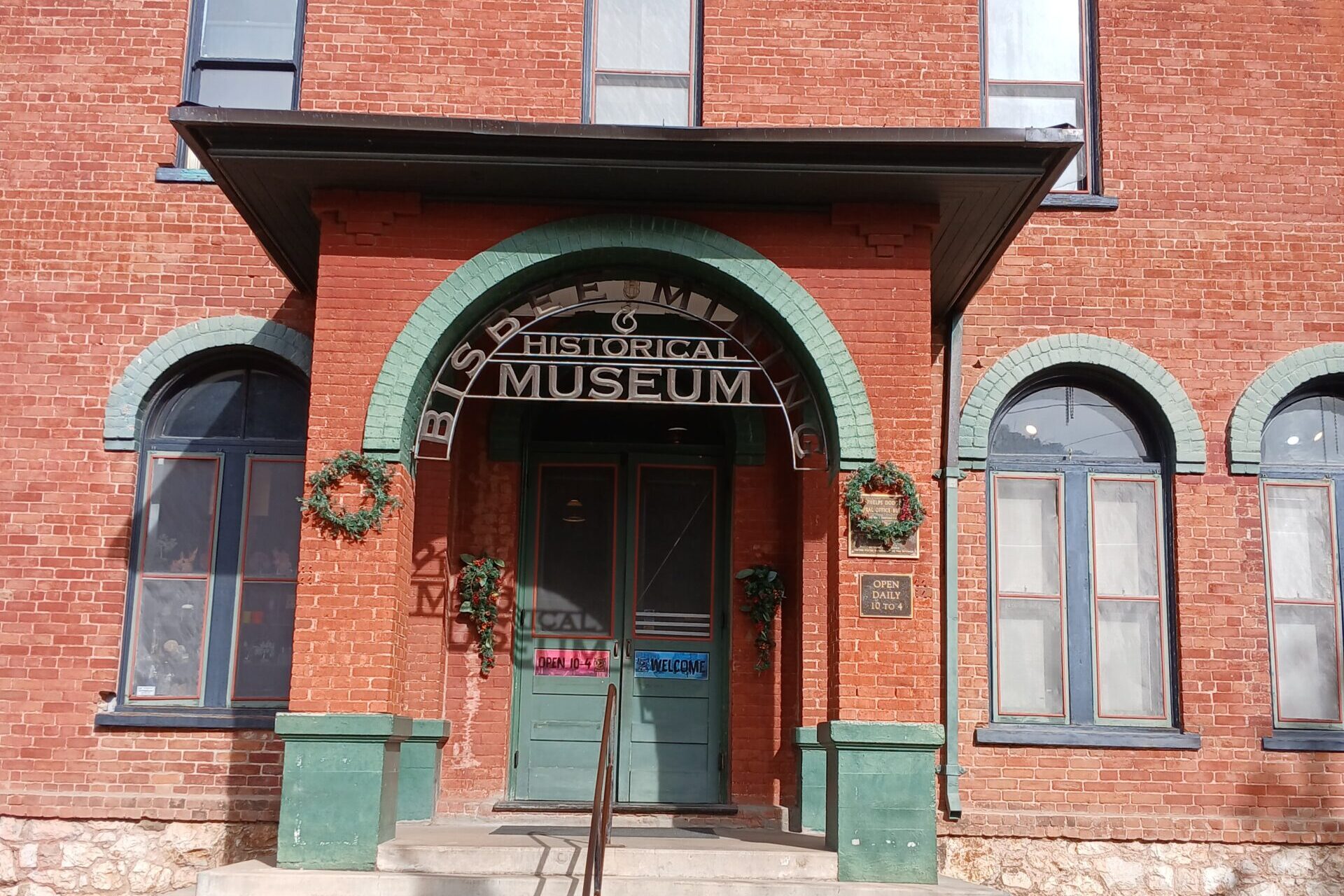
Ever heard of a little thing called The Smithsonian Institution? Did you know Bisbee happens to have a Smithsonian Affiliate Museum?
The Smithsonian has Affiliates throughout the country, including six in Arizona. Among them is Bisbee’s Mining and Historical Museum. Bisbee is the smallest town in the state to hold the honor, with Wickenburg as a distant second.
Its no secret that Bisbee owes its existence to the storied Copper Queen Mine and the bright red metal it produced in such abundance. That mine not only gave birth to this City, but played an important part in the development of the Arizona Territory. The Copper State features on its state seal none other than George Warren, whose claim led to the development of the mine and the City that grew up around it. Being a town of superlatives, it is fitting that the Smithsonian would find in Bisbee a worthy candidate upon which to bestow its blessing.
Ever heard of a little thing called The Smithsonian Institution? Did you know Bisbee happens to have a Smithsonian Affiliate Museum?
The Smithsonian has Affiliates throughout the country, including six in Arizona. Among them is Bisbee’s Mining and Historical Museum. Bisbee is the smallest town in the state to hold the honor, with Wickenburg as a distant second.
Its no secret that Bisbee owes its existence to the storied Copper Queen Mine and the bright red metal it produced in such abundance. That mine not only gave birth to this City, but played an important part in the development of the Arizona Territory. The Copper State features on its state seal none other than George Warren, whose claim led to the development of the mine and the City that grew up around it. Being a town of superlatives, it is fitting that the Smithsonian would find in Bisbee a worthy candidate upon which to bestow its blessing.
And a blessing it is. The museum occupies what was once the Phelps Dodge Mining Company headquarters, in the heart of Old Bisbee’s historic district where Main Street and Brewery Gulch meet. Old mining carts and heavy iron cauldrons are arranged before it, now repurposed as playground equipment providing endless entertainment for children of all ages.
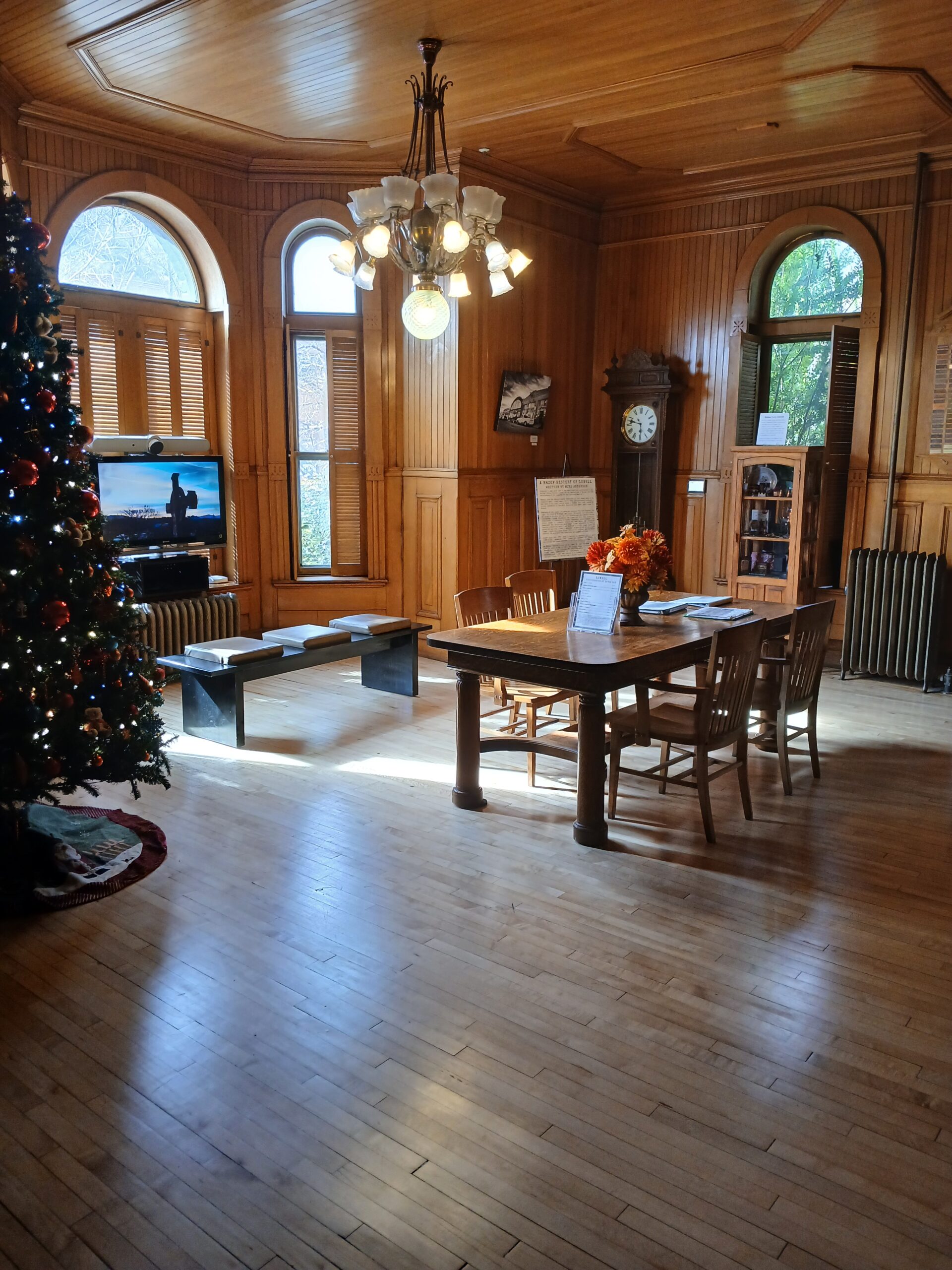
The interior does a great job of bringing Bisbee’s mining past alive and accessible to museum patrons. Densely packed exhibits explore themes and episodes from local history: the immigrants from many countries who sought work in the Queen Mine; the Bisbee Deportation and the Mine’s critical importance in World War I; the remarkable number of fraternal societies like the Elks, Oddfellows and Masons; and the development of the Lavender Pit are all given fair treatment. The old Phelps Dodge board meeting room looks mostly unchanged from its heyday, the Christmas tree and television screen notwithstanding. .

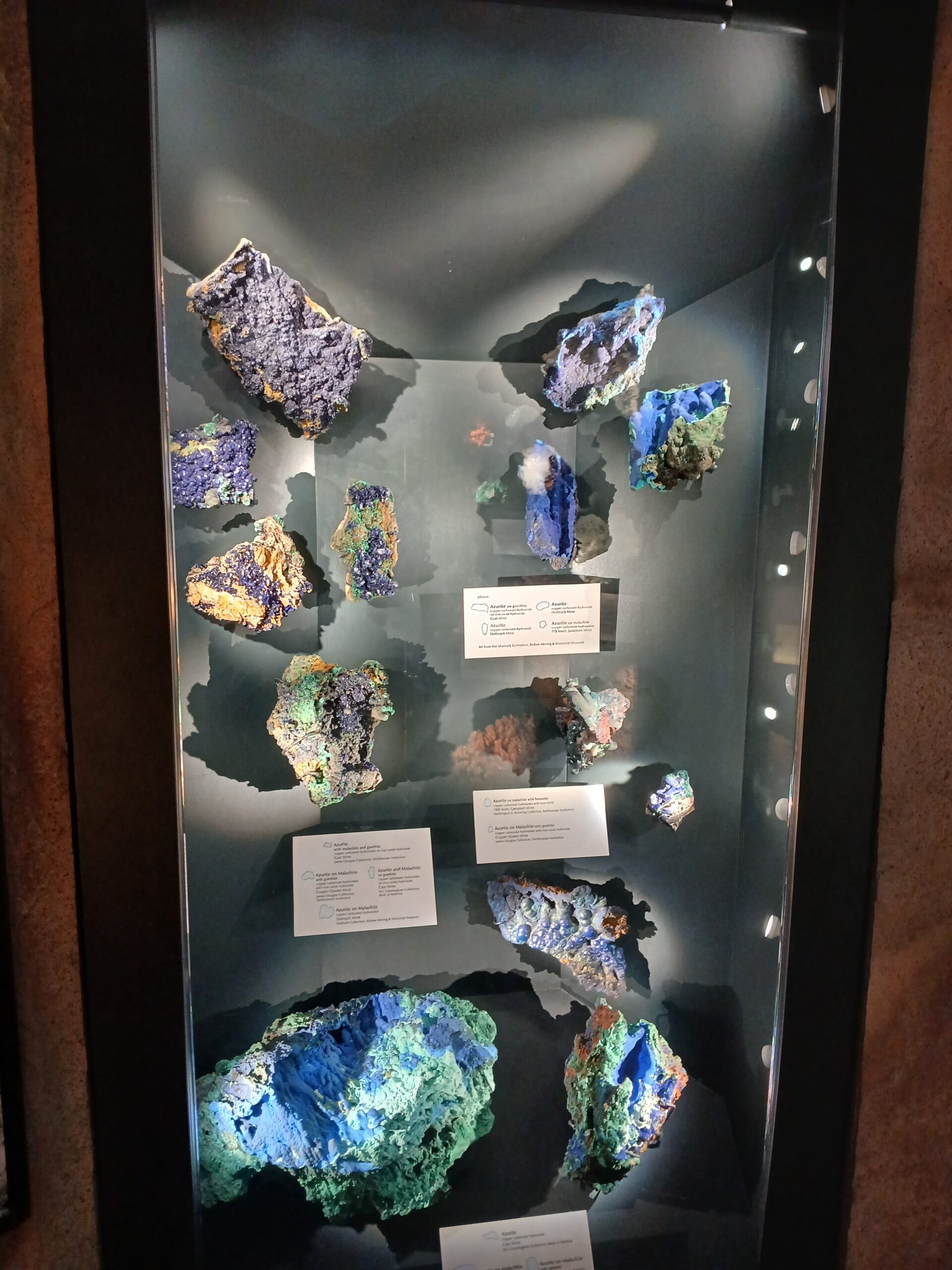
On the second floor, exhibits really, eh, dig in to the business of mining. A staircase takes one through a replica of a mining office with helmets hanging on walls alongside safety posters. Beyond are mannequins ensconced in tight rock tunnels, drills in hand. Here too is a fantastic collection of minerals and metals retrieved from mines in the area. Many of these museum-quality specimens had in fact spent years at the Smithsonian Institution in Washington D.C. before being repatriated back to their Bisbee home.
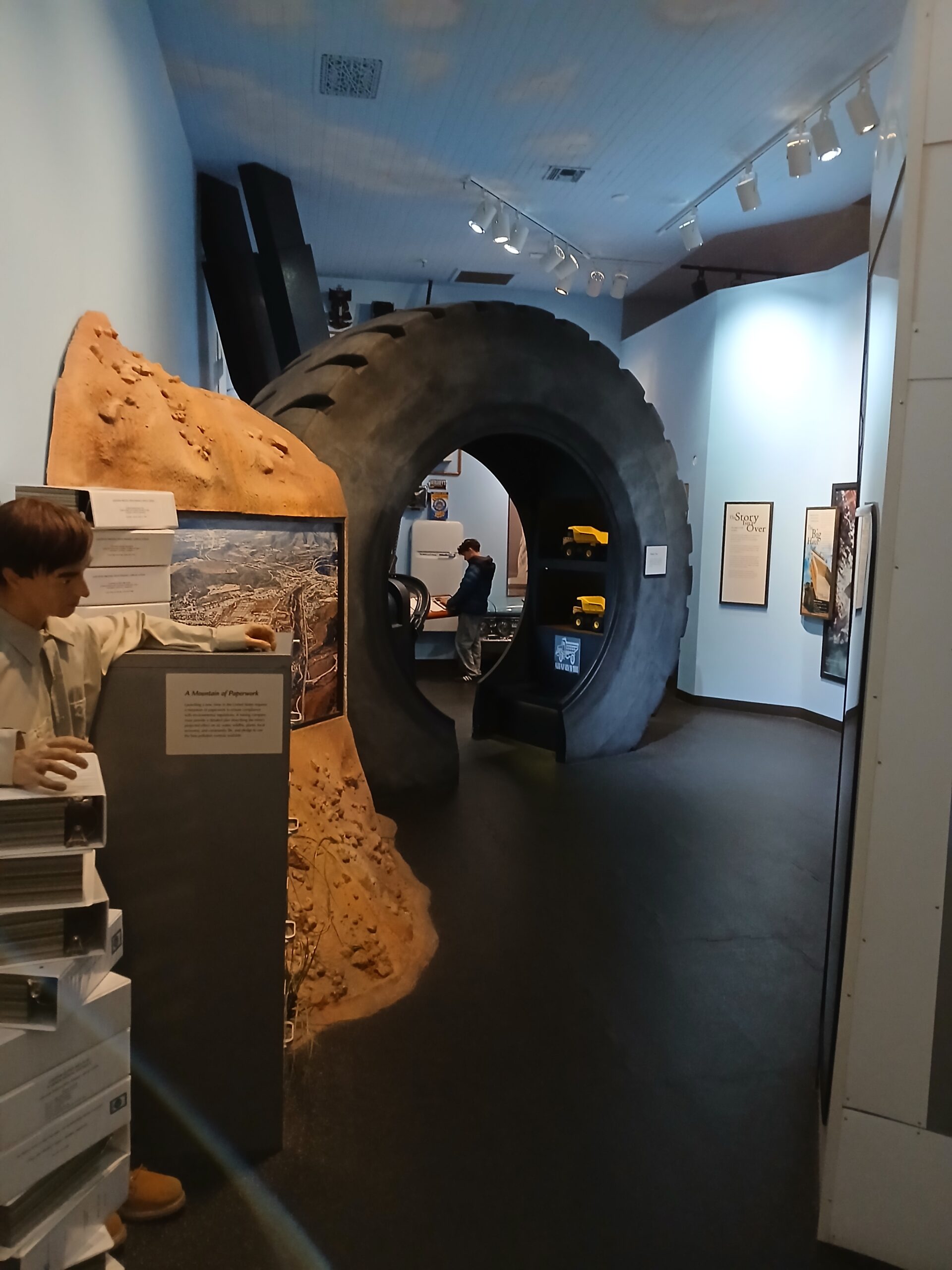
Around the corner from the mannequins demonstrating older mining techniques, we find the modern method: open pit mining, of which Bisbee’s Lavender Pit was an early, famous example. TVs play videos of this method on a loop, with giant Caterpillar 797s hauling tons and tons of ore from the Pit for processing in the nearby Lowell District. An exhibit on the importance of copper in so many aspects of modern life rounds out what is overall a tight, digestible and altogether pleasasnt museum experience.
There is of course a gift shop featuring locally-authored books showcasing the Queen, Campbell and other local mines’ gorgeous mineral specimens. There are also a number of excellent history books on Bisbee, the Southwest and Arizona. Speaking of history: in addition to being a classy museum, this is a proper historical research facility whose archives contain primary source documents that capture Bisbee’s early history. Everything from mining claims to property records to police and court reports are stored here. And the museum staff do regularly provide reports from ongoing research, complete with citations. This facility and its friendly staff thus actively contribute to the historical dialogue; the mines might be shuttered but this research library continues to produce, taking the operation to a higher level.
One might even call it Smithsonian-level.
Keith Allen Dennis is a Bisbee writer, living the dream of becoming the songster he was meant to be. You can find his music at http://keithallendennis.bandcamp.com