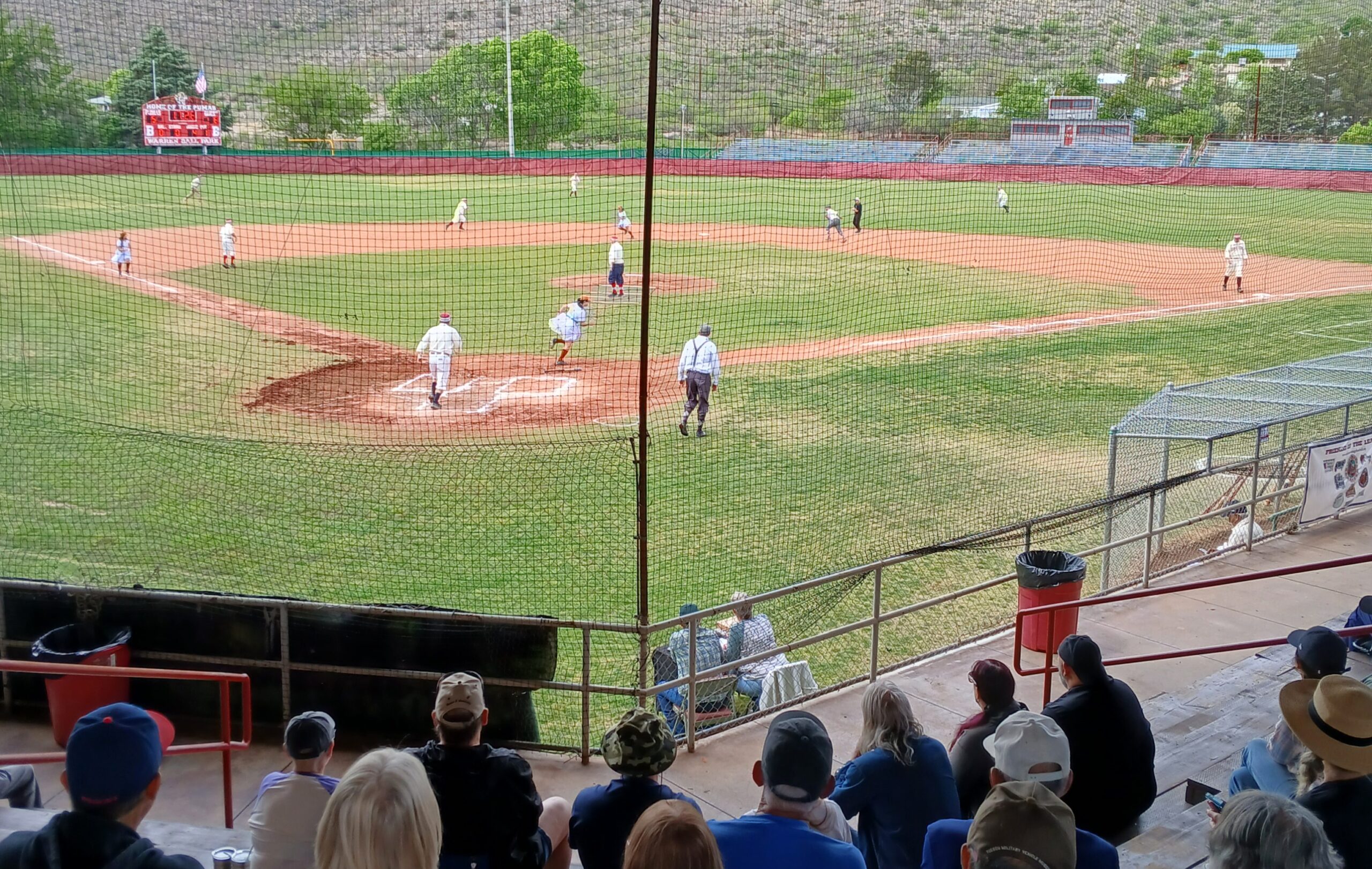
Did you know Bisbee is home to the oldest continuously-operated baseball field in the nation?
It’s true!
In a Tucson Weekly feature on the Warren Ballpark’s Centennial back in 2009, Bisbonian baseball historian David Skinner stopped short of conferring the title outright, but
only because there might be another ancient yard out there somewhere that he’s unaware of.
“But I spent three years researching the question and couldn’t find
one older than Warren,” he says. “The reason some people don’t want to recognize it is because it’s in Bisbee, and who cares about little old Bisbee?”
Who indeed.
The closest contender is Rickwood Field in Birmingham, Alabama. But the first game at that park took place in August of 1910, just 10 months after Bisbee’s inaugural game in June of 1909.
SAFE!
Welcome to the first part in a series on Bisbee’s Warren District, a village just on the other side of the Lavender Pit from Old Bisbee. While the latter so often does the talking for the town as a destination, Warren certainly has its charms, an historic character with ample superlatives of its own. We’ll get to some of those later in the series. But, this being the season, we must begin with baseball, America’s national pastime.
The March heat wave that torched so many Bisbee gardeners’ early efforts has given way to the coolest April in recent memory. It’s a beautiful, balmy day, and we’re posted up at the 15th annual Copper City Classic Base Ball tournament. Not “baseball” but “base ball,” played by the 19th century rules which remind one more of softball than baseball. Ragtime and old brass band music plays on the loudspeakers. The rules, uniforms and overall aesthetic are period-appropriate.
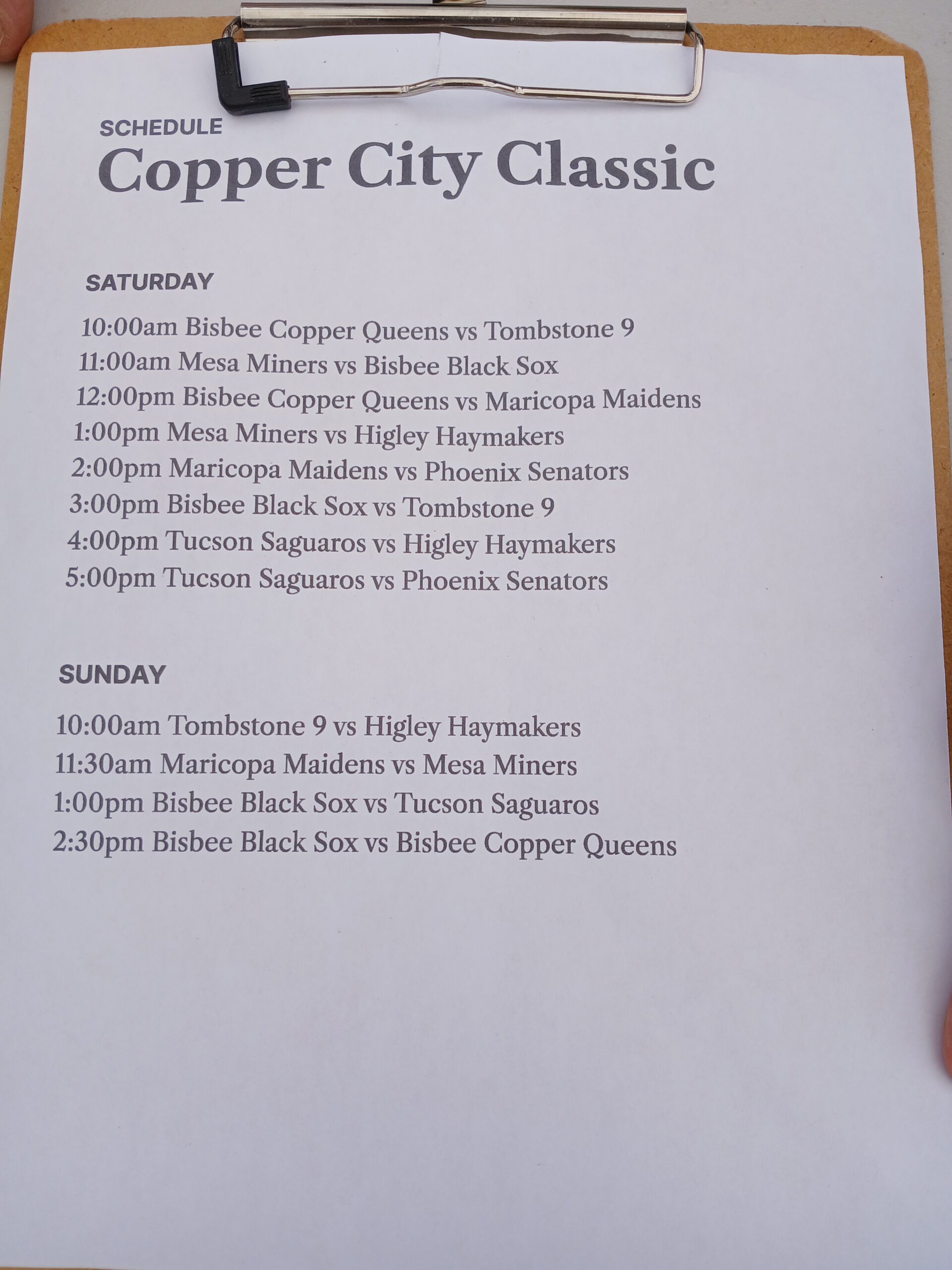
Your humble blogger showed up just as the first game was hitting its stride. The ladies of the newly-revived Copper Queens, named for an all female fast-pitch softball team from the 1940s to 1960s, had opened the tournament in a contest against the Tombstone 9. I got myself a generous plate of BBQ and a Coke from the concession to the sound of cheers as the Queens scored a double, closing fast on Tombstone’s sizeable lead. I found a spot on the bleachers next to Steve Moramarco behind home plate. Perfect place and perfect timing to watch the Copper Queens rocket their way to victory. They’d closed the gap from a two-run deficit by the time I took my seat to a two-run lead in the final minutes of the game. The crowd ate it up, cheering wildly as the Queens loaded up the bases and cleared them out in short order.
Watching Bisbee’s Copper Queens win the first match of the tournament was a rush. But then the Bisbee Black Socks took the field against the Mesa Miners and did it again. This game was more of a slog, each team edging out the other inning by inning. The tension created by this back and forth was delicious but in the end, Bisbee won again. The final score was 8 to 6, just like the first match.
Let me root, root, root for the home team…
As an Old Bisbee ex-pat living in the Warren District, one must confess to missing our comparatively glitzy namesake. There is so much on offer “downtown,” so many events, dress up parties like Alice in Bisbeeland and Pirates of the High Desert, the homespun parades, the fecund music and arts scenes. But having retired following the first two games of the Copper City Classic, I could hear the crowd cheering from my house later in the day. Ditto the fall football games from the field nextdoor, the high school graduations, the music from the Farmer’s Market every Saturday, not to mention the Bisbee Mariachi Festival. If, as the saying goes, “Bisbee is like Mayberry on acid,” Warren is the Mayberry side of town for sure. It ain’t Old Bisbee, but it ain’t bad.
Besides, we have parking.
Aside from the thrill of the game and the privilege of rooting for not one but two victorious home teams, there was something else about the Copper Classic that really struck a deep chord, at least for me. At the end of each match the opposing teams lined up along the diamond flanking home plate. Each team captain gave a rousing bit of oratory, thanking the opposing team, the crowd, the venue, umpires and the game itself before leading the crowd in a cheer. This, in addition to the period-appropriate rules and uniforms, is also part of the game as played historically. The ritualistic displays of sportsmanship and civility that end each game are precious relics from an earlier time. Victor and vanquished alike are not just engaged in a performance of sportsmanlike conduct. They’re leading by example, showing how to win—and lose—gracefully and cheerfully, for the audience, for each other, and for the love of the game.
As far as national pastimes go, one could do a lot worse than base ball.
If you, too, love the game, you can show it via that other time-honored American way, by pitching some tax-deductible Greenbacks to the Friends of the Warren Ballpark who keep it alive.